CEF You Be The Solution Challenge™ Preparation Classes
Build a strong early foundation in chemistry with interactive online classes, simple explanations, quizzes, homework and recorded sessions with Dr Uma Sharma.
The CEF You Be The Solution Challenge™ is the current name of the program formerly known as the You Be The Chemist Challenge®. It is a team-based STEM competition for students in grades 5 to 8.
Chemtopper provides independent preparation support focused on science concepts, chemistry foundations, timed questions, teamwork, communication and sustainability-based problem solving.
The CEF You Be The Solution Challenge™ is the current name of the program formerly known as the You Be The Chemist Challenge®. It is a team-based STEM competition for students in grades 5 to 8. Students prepare for timed science-based questions and the student team also works independently on the video / solution component of the Challenge.
Chemtopper’s role is to provide independent support for the test / science-question preparation part. The classes help students strengthen science and chemistry foundations, practise timed questions, improve accuracy and build confidence. The video / team project component remains the responsibility of the student group.
👥
Team-Based Event
Students prepare as part of a team, so collaboration and clear communication matter.
⏱️
Timed Science Questions
Students need speed, accuracy and confidence in science-based questions.
🧪
Science Foundations
Students strengthen chemistry and science ideas needed for the test-question part.
📌
Video Is Team-Led
The video / solution component must be prepared independently by the student team.
Note: Chemtopper provides independent coaching and preparation support. It is not affiliated with or endorsed by CEF.
Who Should Join These Challenge Preparation Classes?
Suitable for students who:
are in grades 5 to 8 and preparing for the CEF You Be The Solution Challenge™
need stronger science vocabulary and chemistry foundations
want practice with timed science-based questions
need help connecting chemistry with everyday and sustainability problems
want to improve confidence, reasoning and explanation skills
work better with regular quizzes, homework and recorded review
Students learn to:
answer science questions with better speed and accuracy
recognise key chemistry ideas in unfamiliar questions
use data, units, measurements and simple calculations carefully
think about sustainability and community-based solutions
organise ideas for a team video or presentation
communicate scientific reasoning more clearly
How Dr Uma Sharma Supports Challenge Preparation
Preparation for the test part of this challenge should not be limited to memorising facts. Students need science understanding, chemistry vocabulary, timed-question practice and confidence in applying concepts quickly. Dr Uma Sharma’s classes combine concept teaching, quizzes, homework and review so students are better prepared for the science-question component.
🔎
Build Science Basics
Strengthen chemistry and science concepts needed for question rounds.
✅
Practise Timed Questions
Use quizzes and practice sets to improve recall, accuracy and confidence.
📊
Read Data Carefully
Practise units, measurement, graphs, tables and observation-based questions.
🔁
Review Mistakes
Use mistakes to improve accuracy, recall and question-reading skills.
You Be The Solution Challenge™ Reviews and Success Stories
These reviews and success stories relate to Chemtopper’s independent preparation support for the
test / science-question part of the CEF You Be The Solution Challenge™,
formerly known as the You Be The Chemist Challenge®.
★★★★★
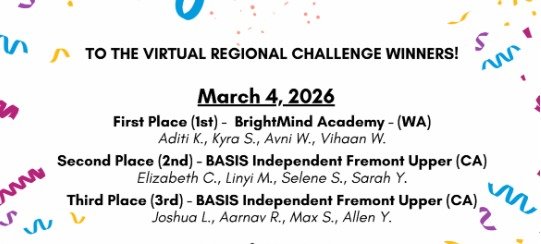
Hi Dr Uma, Very happy to inform you that Avni, Aditi and Kyra got selected in Nationals for YBTS competition... After months of hard work, they have submitted a project work around a real problem in WA state (about Nuclear waste disposal for the site of Hanford where Uranium was procured for Project Manhattan . I’m sure you know about this, where they made those WW2 atom bombs). They will be defending their project work in the Nationals in June in Houston. We are looking forward and will keep you informed.
Thank you so much for the support you have a big hand in their success :)
★★★★★
Namaste Dr Uma ji. Kyra will be participating at the YBTS National along with Avni and Aditi this coming week in Houston. We wanted to graciously extend our “Big Thank you” and support during all these years for all the Chemistry learnings given to Kyra.
★★★★★
Thanks so much Dr Uma! Without your teaching it would not happened
Kids are now in top 5
Going to Houston in June to present on the national stage
A team of students coached by Dr Uma Sharma secured
First Place in the Virtual Regional Challenge and progressed to the national level.
This success reflects the value of strong science foundations, timed-question practice,
careful reasoning and regular preparation for the test / science-question part of the Challenge.
Chemtopper provides independent support for the test / science-question preparation part.
The video / team solution component must be prepared independently by the student group.
Success story from students coached by Dr Uma Sharma for Challenge preparation.
You Be The Solution Challenge™ Preparation — Frequently Asked Questions
What is the CEF You Be The Solution Challenge™?
The CEF You Be The Solution Challenge™ is the current name of the program formerly known as the You Be The Chemist Challenge®. It is a team-based STEM competition for students in grades 5 to 8. Chemtopper provides independent support for the test / science-question preparation part.
Who should join these preparation classes?
These classes are suitable for students in grades 5 to 8 who are preparing for the CEF You Be The Solution Challenge™, especially students who need stronger science concepts, chemistry foundations, timed-question practice, accuracy and confidence for the test / science-question part.
Is this an official CEF program?
No. Chemtopper provides independent preparation and coaching support for students interested in the CEF You Be The Solution Challenge™. Chemtopper is not affiliated with or endorsed by CEF.
What does the competition involve?
The Challenge includes timed science-based questions and a team video / solution component. Chemtopper support is for the test / science-question preparation part only. The video / solution component must be prepared independently by the student team.
What topics are covered in preparation?
Preparation covers sustainability and real-world science contexts, scientific inquiry, measurements and units, matter and changes, atoms and ions, the periodic table, formulas and bonding, chemical reactions, acids and bases, nuclear science basics, laboratory equipment, laboratory safety and timed mixed-topic practice for the test / science-question part of the Challenge.
Are quizzes and homework provided?
Yes. Short quizzes, homework and review tasks are used to build accuracy, recall, scientific vocabulary and confidence.
Are sessions recorded?
Yes. Live classes are recorded so students can revise explanations, practice questions and preparation guidance later.
How does the free 20-minute trial session work?
The free 20-minute trial session helps assess the student’s current level, goals and suitability for a You Be The Solution Challenge™ test preparation group.
Many families still search for this program as YBTC or You Be The Chemist Challenge; the current program name is CEF You Be The Solution Challenge.
You Be The Solution Challenge™ Test Preparation with Dr Uma Sharma
Chemtopper provides independent support for the test / science-question preparation part of the CEF You Be The Solution Challenge™, formerly known as the You Be The Chemist Challenge®. The classes focus on science foundations, chemistry concepts, timed-question practice, accuracy, recall and confidence.
👥
Small Group
Focused online group for students preparing for a team-based STEM challenge.
⏱️
Timed Practice
Students practise science questions with attention to speed, accuracy and careful reading.
🌱
Sustainability Thinking
Students connect science ideas with community and sustainability-based solutions.
✅
Test-Part Focus
Classes focus on the science-question preparation part of the Challenge.
Class Format
Live online classes with Dr Uma Sharma.
Science and chemistry foundations explained step by step.
Timed-question practice to improve recall, speed and confidence.
Quizzes and homework for regular revision.
Recorded sessions available for later review.
Video / team project note: the video and group project work must be prepared independently by the student team. Chemtopper support is limited to the test / science-question preparation part of the Challenge.
You Be The Solution Challenge™ Test Preparation Groups
Current and upcoming preparation groups are shown below. These are small online groups for science concepts, chemistry foundations, timed-question practice, quizzes, homework and recorded review for the test / science-question part of the Challenge.
Active and upcoming YBTC Chemistry group classes with hours, schedule, start date, status and registration.
Group Name
No. of Hours
Days and Time
Start Date
Status
Register
YBTC 2027 GP 2
0 Hours
Fri
4.30 PM to 6.00 PM PT (7.30 PM to 9.00 PM ET, 6.30 PM to 8.00 PM CT)
8.30 PM to 9.30 PM PST till 31 Aug. Thereafter Fri 5:00 PM to 6.00 PM PST
07-Jun-2026
In progressRegistration Closed
—
YBTC Target 2027 Ph II
0 Hours
Sun
3.30 PM to 4.30 PM PT (6.30 PM to 7.30 PM ET, 5.30 PM to 6.30 PM CT)
23-Aug-2026
In progressRegistration Closed
—
You Be The Solution Challenge™ Test Preparation Areas
The preparation is aligned with the broad science areas reflected in the official study materials, but the class focus remains on the test / science-question part of the Challenge. Students practise the concepts, vocabulary, calculations and reasoning skills needed to answer science questions with better accuracy and confidence.
The video / team solution component must be prepared independently by the student group. Chemtopper does not prepare the team video or project for students.
1. Sustainability and Real-World Science Contexts
Meaning of sustainability and why it matters in science-based decisions
Environmental, social and economic dimensions of sustainable choices
Natural resources, renewable and non-renewable resources
Selected global sustainability themes such as water, energy, cities, climate, oceans and biodiversity
How everyday actions connect with science, technology and community impact
2. Scientific Thinking, Inquiry and Experimental Design
Observation, questioning and evidence-based reasoning
Background research, hypothesis formation and testable questions
Independent, dependent and controlled variables
Control groups, experimental groups and fair testing
Recording data, analysing results and drawing conclusions
Difference between scientific theories and scientific laws
3. Measurement, Units and Data Handling
Accuracy, precision and uncertainty in measurement
Significant figures and rounding in science answers
Mass, weight, length, volume, temperature, density, pressure and energy
SI units, metric prefixes and derived units
Metric conversions and unit cancellation
Scientific notation for very large and very small numbers
Reading tables, graphs and simple quantitative data
4. Matter, Properties, Changes and Separation Ideas
Pure substances, elements, compounds and mixtures
Homogeneous mixtures, heterogeneous mixtures, solutions and colloids
Physical and chemical properties of substances
Solids, liquids, gases and plasma as states of matter
Phase changes such as melting, freezing, evaporation, boiling, condensation, sublimation and deposition
Physical changes versus chemical changes
Energy changes, heat transfer and conservation of energy
Basic physical and chemical separation processes such as filtration and precipitation
5. Atoms, Ions, Isotopes and Chemical Symbols
Atoms as building blocks of matter
Protons, neutrons, electrons and the nucleus
Atomic number, mass number and chemical symbols
Molecules and simple molecular formulas
Cations, anions and ion formation
Isotopes and average atomic mass
Element examples and everyday uses of important elements